One sentence. Four product pages. Two hours. One round of notes.
The whole brief was one sentence
This is exactly what I typed to start the session. Word for word, nothing trimmed:
Familiarize yourself with the Pushing Squares website, then evaluate
what needs to be done for CBA, Fuzz, Subtract to be done and sellable
by the end of the night.
Twenty five words. No spec. No file paths. No list of steps. No mention of checkout, signing, pricing, marketing footage, or which pages to build.
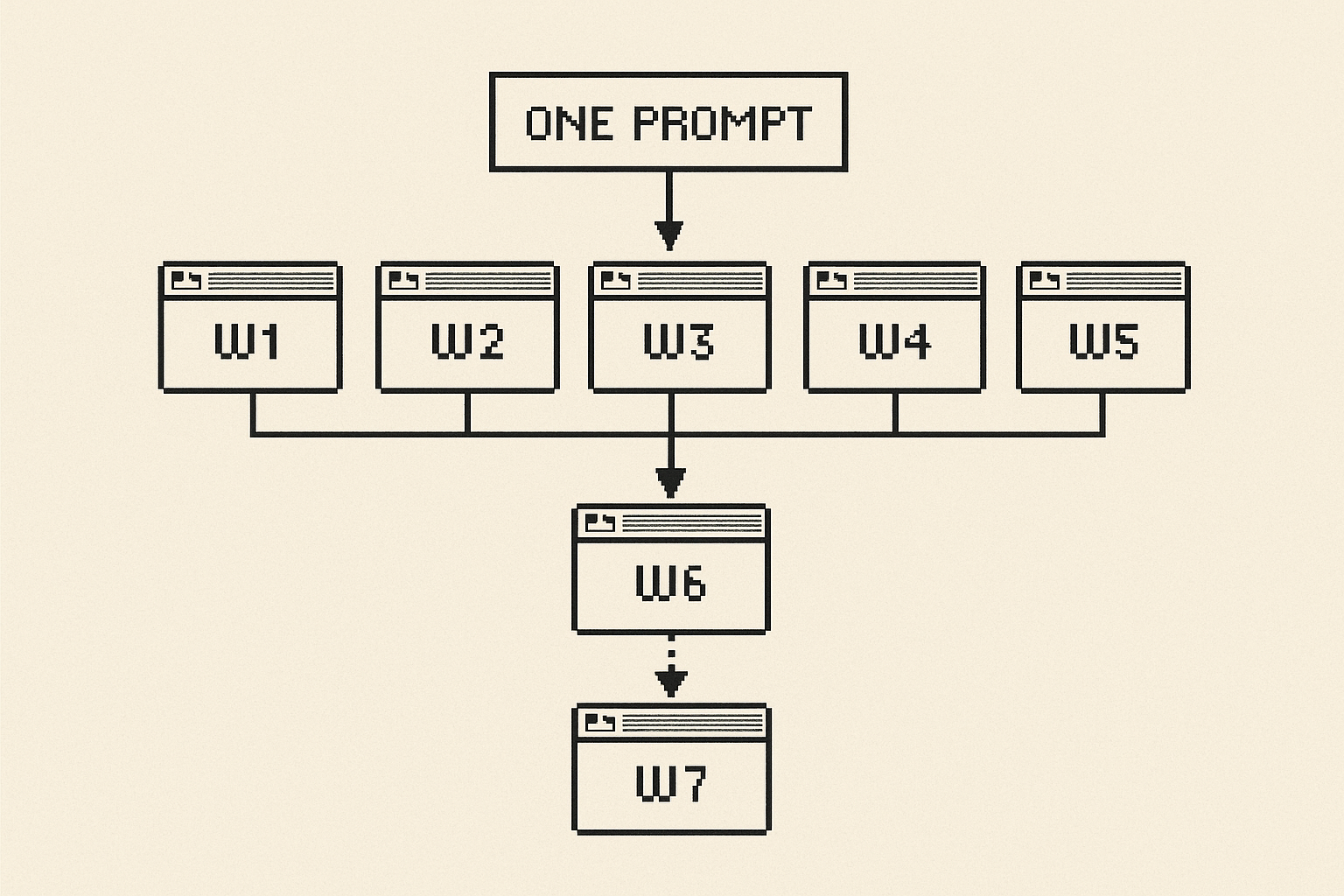
About two hours later there were product pages live on the site. Real checkout. Real signed builds. Real marketing footage rendered from scratch. My total input for the whole run was a handful of "status?" check-ins and one round of notes.
The prompt was tiny. The intelligence was not in the prompt.
The theory: a prompt is a pointer, not a payload
Here is the idea most people get wrong about working with AI.
They treat the prompt as the place where the thinking happens. So they write longer and longer prompts, stacking in context, examples, rules, edge cases, trying to cram the whole job into the message box. The prompt becomes the spec.
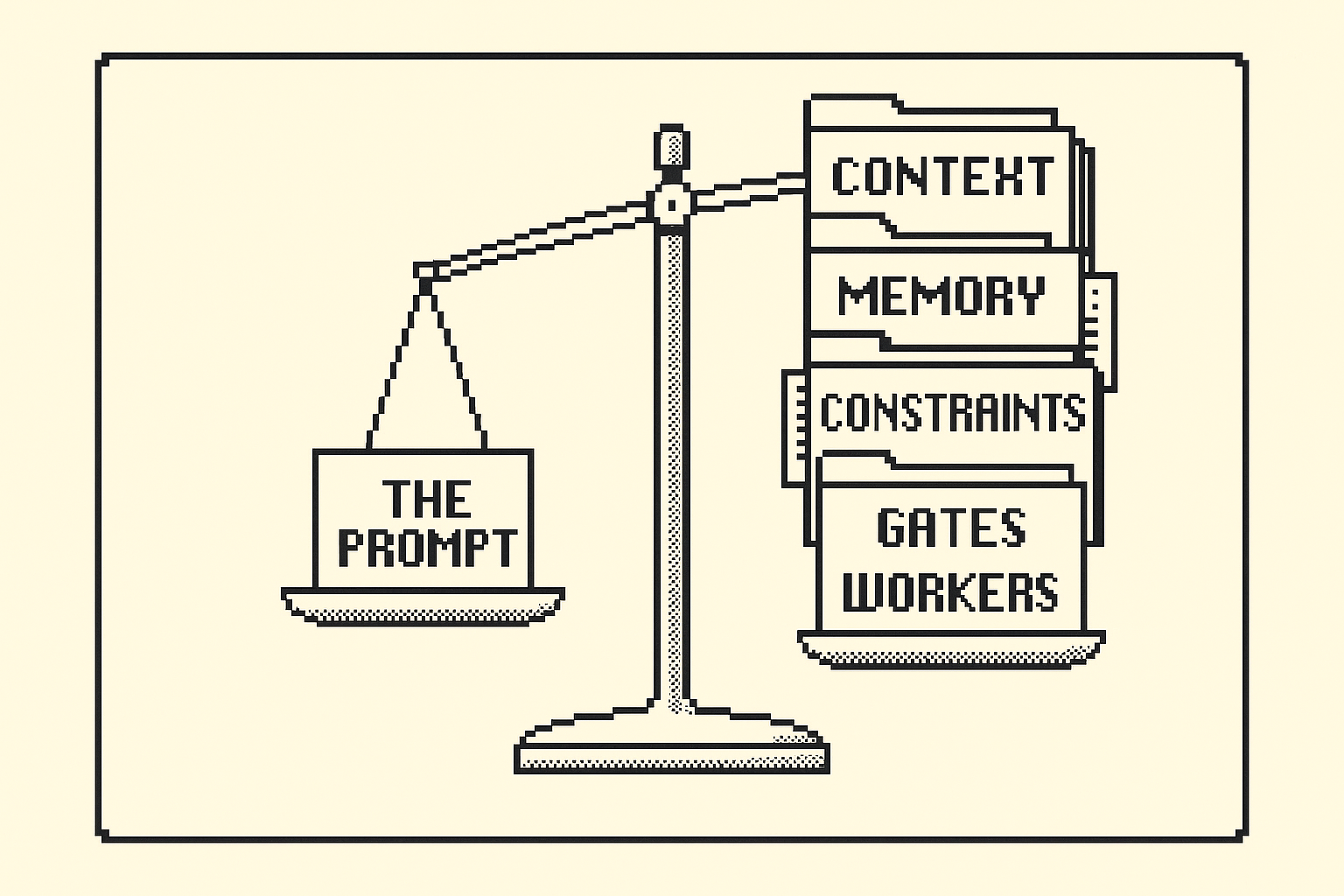
That is backwards. A good prompt is not a payload that carries the work. It is a pointer that aims at work the system already understands.
My one sentence carried almost no information. Twenty five words cannot describe what "sellable" means for a software product. They cannot describe a checkout flow, a signing pipeline, a brand voice, or how to render a shader over footage without the host app open. The task needed thousands of small decisions. My prompt resolved none of them.
So where did the decisions come from? They were already resolved. Not in the prompt. In the workspace around it.
What it already understood that I never said
This is the part worth slowing down on, because it is the whole argument. Off that one sentence, here is what the workspace already knew, with no further context from me:
-
What "sellable" even means. It did not ask. The site already had live products, and those live pages defined the pattern: a product page, a checkout link, a price, a download-verify route, real assets. "Sellable" was already specified by the existing reference, so it read the reference instead of asking me.
-
That the builds did not need notarisation. It checked the precedent set by the products already shipped, saw they used the same lightweight signing, and concluded the same path was safe. I never mentioned signing. The decision was inherited from history.
-
That a render engine already existed to shoot the marketing. The hardest part of "sellable" was marketing footage, and normally that needs the host app open to capture. The workspace already held a tool that pulls each plugin's shader straight from its source and renders it over footage on its own. I did not know that was the unlock when I typed the prompt. The workspace did.
-
That the render tool's bugs were already diagnosed. A handoff note from an earlier session had two bugs in that tool written up, with the exact fixes. So "fix the renderer" was not a research task. It was a known job waiting to be executed. That note was deposited by a past version of this same collaboration.
-
Where the credentials lived. It worked out that the payment and storage keys were not local, that they lived with the deployment, and that the workers should pull them after cloning. I never told it where anything was kept.
-
The brand voice and page structure. It matched the new pages to the existing ones in tone and shape without me handing over a style guide, because the style guide is the workspace.
None of that was in my twenty five words. All of it was load-bearing for the result.
I did not give it deep context. It already had deep context. My prompt just pointed at it.
Why the workspace knows so much: context compounds
The workspace did not understand all this by accident. It understands because every prior session left something behind.
The handoff note that had the render bugs diagnosed. The ship reports from earlier products. The memory of how signing was done last time. The live reference pages built in previous runs. The brand rules written down once and never re-typed. Each of those was a deposit. By the time I typed one sentence, the account had been compounding for months.
That is the real mechanism. A long prompt tries to load context at the moment of asking, every single time, from cold. A good workspace loads context once and lets it accumulate, so the next prompt can be short because the understanding is already resident.
This is the 10% rule pointed inward. Make the system that surrounds the work 10% better every time you touch it, and eventually a sentence is enough to move a mountain, because the mountain was already half-moved by everyone who came before, including past you.
The collaboration ran on a handful of short messages
It was not just the opening that was terse. The entire two hours of my side of the conversation was tiny. These are real, verbatim:
"status?"
"go ahead"
"can you spin up a local host for me to QC"
That was most of it. While five workers built, signed, and rendered in parallel, and two more waited on their inputs, I mostly asked how it was going. I was an orchestrator, not a typist.
It stopped at the gates and held for me
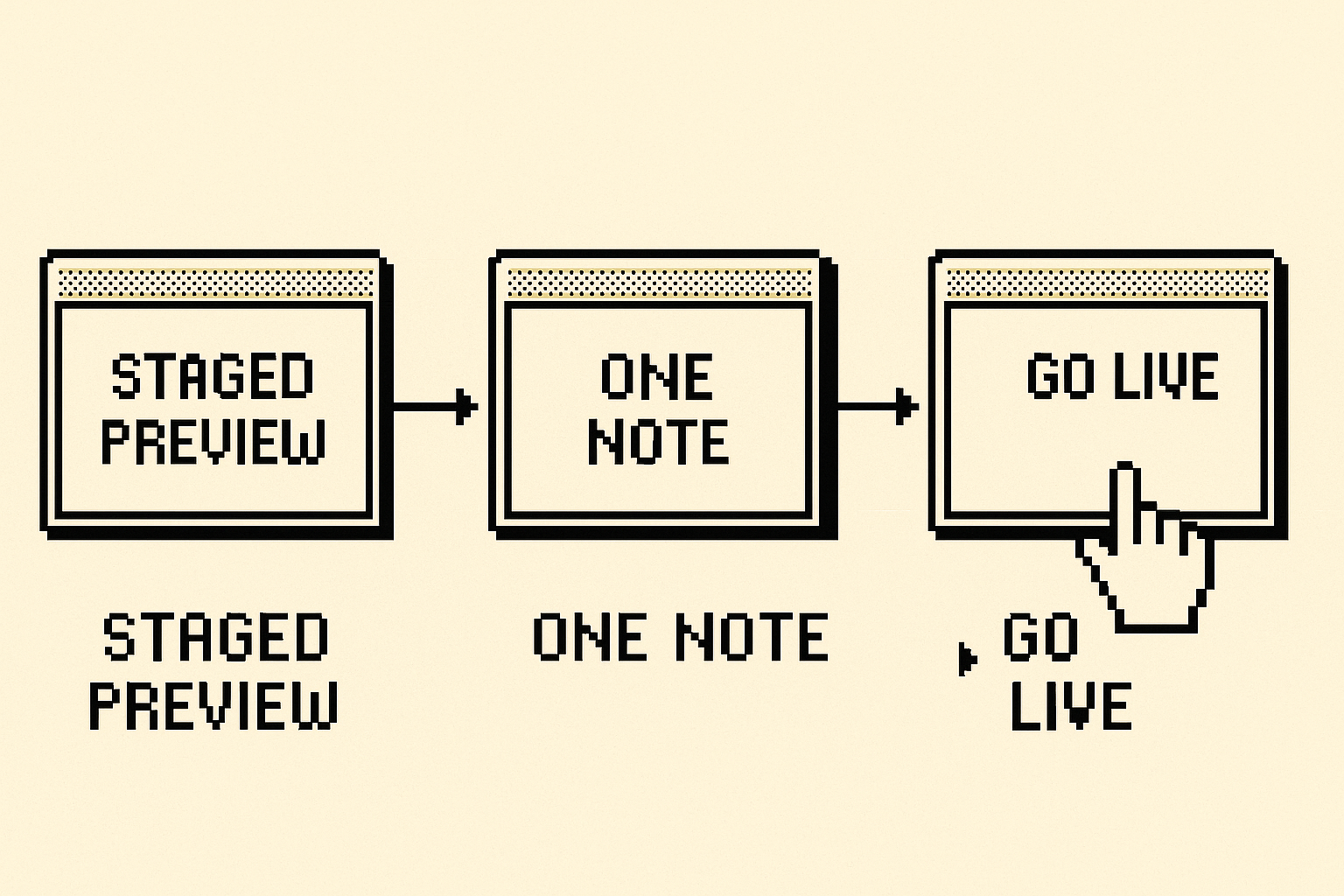
The system was autonomous, but it was not unsupervised. It staged a preview and stopped. It did not push anything live. It held for me to look and click.
When a fourth plugin went up later, the entire correction I gave was one message:
Don't include the images for the effects we don't have images for,
just use the gallery for the ones I provided, but mention all of the
effects below in text. Other than that, everything looks perfect.
One note. Then:
perfect merge and deploy live to the site via vercel plz
That is the shape of being in the loop properly. Not writing the work. Not babysitting every step. Just sitting at the two or three gates that actually need a human: is this right, and should it go live.
So: build the workspace, not the prompt
Most people think the leverage is in writing a clever prompt. It is not. A one line prompt did all of this because of everything sitting around it. The context. The constraints. The review gates. The accumulated memory. The workers that already know how to build, sign, render and ship.
If you want short prompts to do large things, you do not get there by writing better sentences. You get there by building a system that already understands, so the sentence has somewhere deep to land.
The prompt is the trigger. The workspace is the intelligence.
Stop prompting. Start defining outcomes_